Sep 11, 2026
How U.S. Buyers Can Compare Chinese Supplier Quotes—and Avoid Missing Costs
Compare Chinese supplier quotes beyond unit price. Check configuration, packaging, samples, tooling, inspection and delivery scope before placing an order.
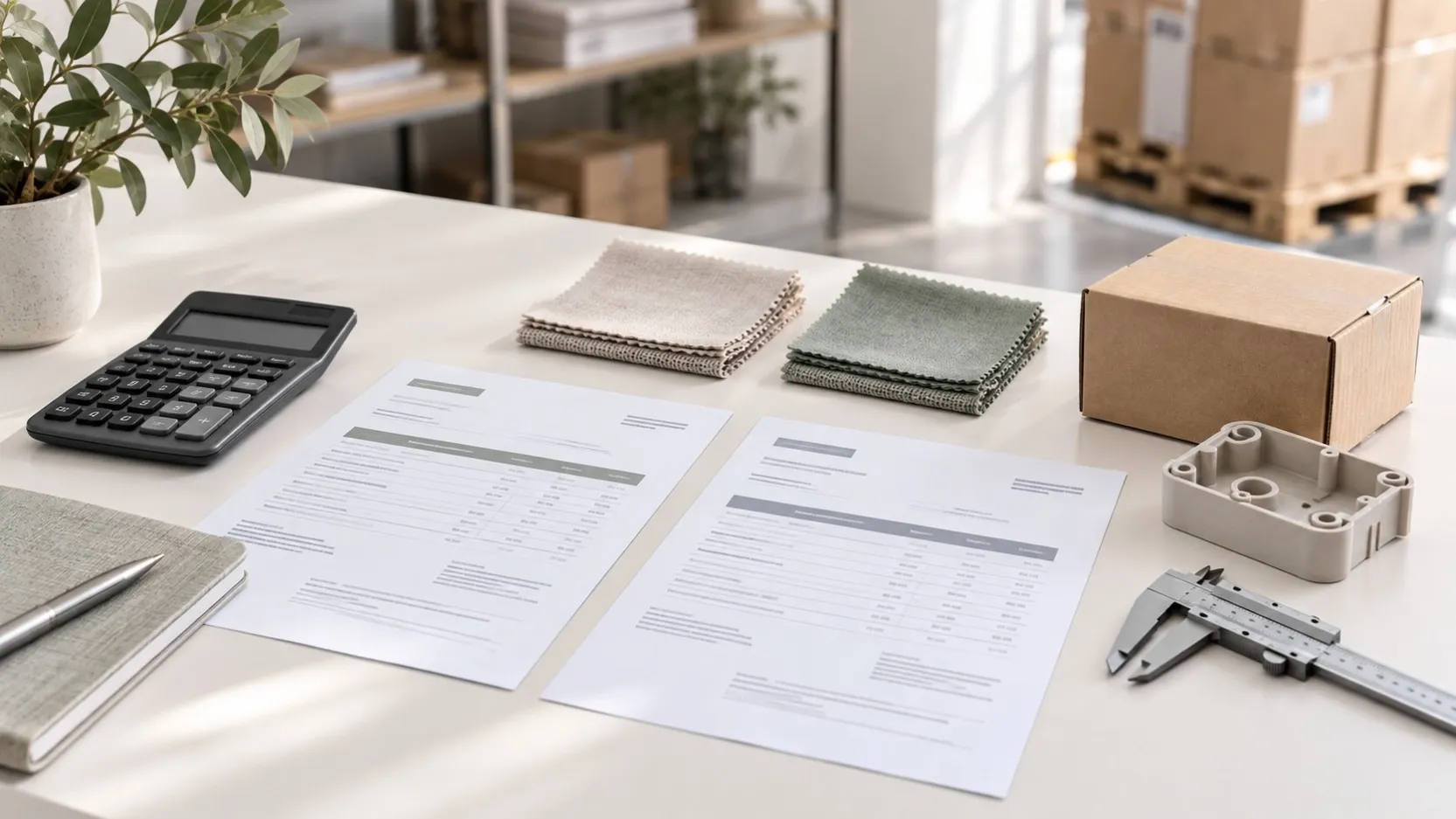
The lowest unit price is not necessarily the lowest total purchasing cost. Two Chinese suppliers may quote products that look similar while including different materials, accessories, packaging, development work or delivery services.
Before comparing prices, make sure both quotations cover the same product specification, order quantity and delivery scope. Then review six areas where missing details can change your budget: configuration, packaging, samples, tooling, inspection and delivery.
An omitted item is not automatically a hidden charge. It may simply be an assumption that neither side has confirmed. The practical solution is to turn those assumptions into written line items before paying a deposit.
1. Product Configuration: Compare the Same Version
A product photo is a useful reference, but it is not a complete purchasing specification.
Ask each supplier to identify the exact model and list the materials, dimensions, functions and accessories included in the quoted price. Separate standard components from optional upgrades.
Your comparison should cover:
Model number and specification revision.
Materials and construction.
Dimensions and agreed tolerances.
Functions and included accessories.
Color, logo and other customization.
Quantity per model and color.
Any required testing or documentation, with its cost and scope identified separately.
For example, the LeKee Care electric baby cradle allows buyers to select the fabric, function package, remote control and data cable. A quote for one configuration should not be compared directly with a quote that includes a different set of options.
Likewise, the EVA pet carrier collection includes KISS, KISS+ and BLOOM models. Buyers should compare the selected model and accessories—not assume every product in the collection has identical specifications.
Ask the supplier: “Please list everything included in this unit price and price optional upgrades separately.”
2. Packaging: Check the Packed Product, Not Just the Product
Packaging affects more than appearance. It changes shipment volume, handling requirements and the work needed before goods are ready for your sales channel.
“Standard export packaging” is too broad for a reliable comparison. Ask for details of:
Individual packaging and protective materials.
Printed retail boxes versus plain boxes.
Instructions, inserts, barcodes and carton marks.
Units per outer carton.
Outer carton dimensions.
Net and gross weight.
Pallets, if required.
Any separately charged artwork setup or packaging development.
The custom corrugated cardboard cat sofa, for example, is supplied flat-packed, with one set per carton. Compare that packing method with any alternative quote for assembled goods: the product price alone will not capture the difference in shipping space or assembly requirements.
Also distinguish calculated packing data from measured data. For the EVA pet carrier collection, carton gross weights are calculated references; final packed-carton measurements should be checked before freight booking.
A quoted container quantity should state its assumptions, including pallet use, carton orientation and stacking limits. Treat it as a planning figure unless the actual loading arrangement has been validated.
Ask the supplier: “Does this price include our complete retail-ready packaging, and which packing figures have been measured on a finished packed sample?”
3. Samples: Separate the Sample Fee from the Full Approval Cost
“Sample available” does not explain what the sample represents—or what you will pay to receive it.
Clarify whether you are buying:
An existing standard sample.
A customized sample with your selected materials or branding.
A pre-production sample representing the agreed bulk specification.
Then confirm the sample charge, courier cost, revision scope and expected timing. If packaging approval is important, specify whether the sample includes the final box, labels and inserts.
A sample fee credit should also be documented. Check which bulk order qualifies, whether it must use the same model, any minimum quantity requirement and the amount eligible for credit.
Do not assume that sample freight, tooling or development charges will be deducted from a later order.
LeKee Care’s standard sample policy provides for charged samples, buyer-paid shipping and a conditional one-time credit for eligible standard sample fees. Specific arrangements are discussed case by case and confirmed in writing; see the commercial FAQ.
Ask the supplier: “What does the sample fee cover, how are revisions charged, and what exact amount can be credited against a qualifying bulk order?”
4. Tooling: Identify One-Time Costs and Future Responsibilities
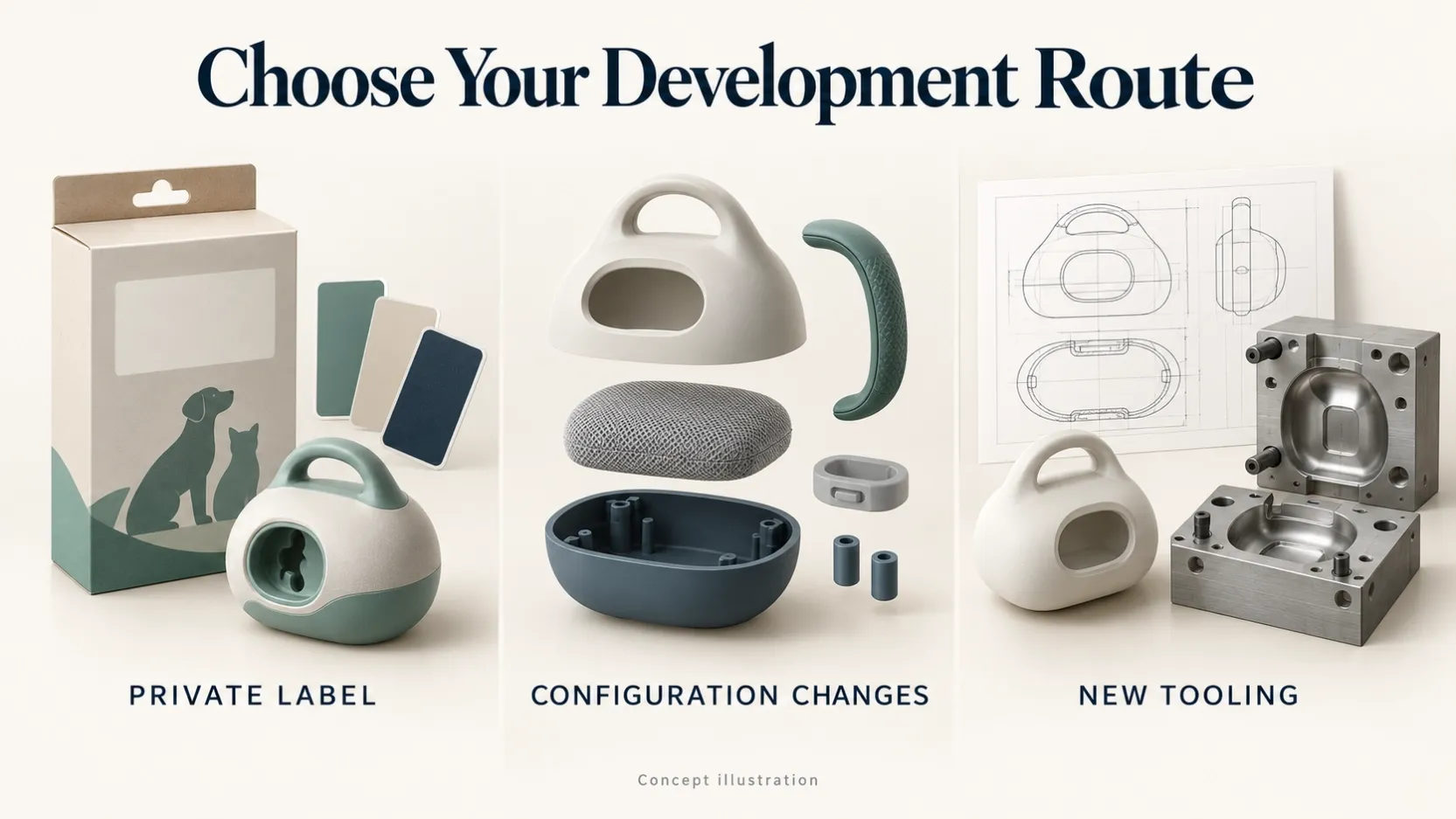
Customization does not always require a new mold. Depending on the project, it may involve printing plates, cutting dies, fixtures, artwork preparation or changes to existing tooling.
Ask the supplier to identify what is actually needed instead of accepting a single unexplained “development fee.”
Where tooling is required, confirm:
Each tooling or setup item and its price.
What development work and revisions are included.
The payment schedule.
How trial samples will be reviewed and approved.
Ownership and permitted use.
Storage, maintenance and replacement responsibilities.
Whether and under what conditions tooling can be transferred.
Ownership should not be assumed simply because a tooling charge appears on the invoice. The agreement should state what the payment provides.
Also separate first-order economics from repeat-order economics. A supplier with a higher first-order total may have a different repeat-order price because development costs are charged separately rather than included in every unit.
Ask the supplier: “Which costs apply only to the first order, and what will the same specification cost on a repeat order?”
5. Inspection: Define the Work Before Booking the Visit
“Third-party inspection accepted” is a useful starting point, but it does not define the inspection scope or acceptance criteria.
Before arranging a visit, agree on:
The product specification and approved sample to be used.
Inspection timing and the required production and packing status.
Quantity and sampling approach.
Checks for appearance, dimensions, functions and accessories.
Packaging, labeling and carton checks.
Defect definitions and acceptance criteria.
Reporting requirements.
Who pays for the initial inspection.
How corrections and any reinspection will be handled.
For an electric product, a general visual inspection should not be confused with laboratory testing or proof of market compliance. If separate testing is required, identify the work, responsible party, timing and charges before placing the order.
LeKee Care accepts independently arranged third-party inspection. Its standard arrangements request coordination at least seven days in advance, with scope and acceptance criteria agreed beforehand. Initial inspection fees are buyer-paid; correction and reasonable, pre-agreed reinspection costs for nonconformity with written specifications are addressed in the business FAQ.
Ask the supplier: “What written criteria will determine whether the order passes, and what happens before shipment if it does not?”
6. Delivery Scope: Define Where the Supplier’s Quote Ends
“Delivery included” needs a destination and a list of included services.
Ask the supplier and freight provider to identify the agreed trade term, named place or port, and applicable version. Confirm the actual cost allocation instead of comparing quotations by an abbreviation alone.
Your cost comparison should identify whether each item is included, excluded or still to be confirmed:
Transport from the factory.
Origin handling and export-related services.
Main international freight.
Insurance.
Destination handling.
Customs brokerage, duties and other applicable import charges.
Final delivery to the agreed warehouse.
Unloading, appointments, storage or other additional services.
The applicable costs depend on the shipment and agreed terms. Missing or provisional amounts should remain visible in your budget—not be treated as zero.
Also distinguish production lead time from arrival time. “25 days” may describe production only, not the time until goods reach a U.S. warehouse.
For example, the cat sofa product lists a 25-day production lead time. Buyers should separately confirm the schedule’s starting point, approval requirements, inspection arrangements and transport time.
Ask the supplier: “What is the delivery endpoint, which charges are excluded, and does the quoted lead time mean production completion or arrival at that destination?”
Build One Comparison Sheet Before Choosing a Supplier
Send every supplier the same specification and ask them to complete the same fields.
Comparison area | Information to record |
|---|---|
Configuration | Model, specification revision, included functions and accessories |
Quantity | Total units, model mix, color mix and MOQ conditions |
Packaging | Packaging type, artwork, labels, units per carton, dimensions and gross weight |
Samples | Sample type, fee, freight, revisions, timing and credit conditions |
Tooling | Itemized setup costs, approval process, ownership and repeat-order treatment |
Inspection | Scope, acceptance criteria, initial fee and correction/reinspection arrangements |
Delivery | Trade term, named destination, included services and exclusions |
Commercial terms | Currency, quotation validity, payment schedule and lead-time starting point |
For internal budgeting, calculate a comparable first-order cost:
Goods + excluded packaging + samples and sample freight + tooling or development + inspection or testing + transport and import-related costs − confirmed credits.
Only add charges that are not already included elsewhere. Keep uncertain amounts separate and obtain estimates before making the purchasing decision.
For illustration only, a $0.30 unit-price difference on 1,000 units equals $300. If the lower quote excludes $450 of required packaging and setup that the other quote includes, it is no longer the cheaper first-order option—assuming everything else is equivalent.
Frequently Asked Questions
Should I always choose the lowest quotation?
No. First establish that the quotations cover the same specification and scope. Then assess the total cost, sample results, delivery assumptions and the supplier’s ability to meet the agreed requirements.
Does a paid sample guarantee that bulk production will match it?
No. Record the approved sample and its specification, and agree on how production changes and inspection will be handled. Sample approval is a reference point, not a substitute for a written order specification.
Is third-party inspection the same as product testing?
No. An inspection checks the order against an agreed scope. Laboratory testing is separate work with its own methods and objectives. Identify which services your project needs and budget for them separately.
Can payment terms and sample credits be negotiated?
They can be discussed, but neither party should assume an exception has been accepted. Record the final arrangement in writing. LeKee Care reviews specific commercial arrangements case by case.
Request a Quote with a Clear Scope
A useful quotation starts with a useful brief. Send LeKee Care your selected product or reference, required configuration, quantity by model and color, packaging requirements, sample expectations, destination and delivery target.
Before confirming an order, review our payment, samples and third-party inspection FAQ. Specific configurations, charges and commercial terms are subject to project discussion and the final written agreement.
The goal is not simply to obtain a lower price. It is to know exactly what you are buying, what remains outside the quote and what must happen before the goods are ready to ship.