Sep 3, 2026
How U.S. Buyers Can Confirm Packaging, Labels and Lead Time Before OEM/ODM Production
A practical guide for U.S. retailers, Amazon sellers, distributors, and private-label brands confirming packaging, labels, lead time, and pre-mass production details before OEM/ODM production.
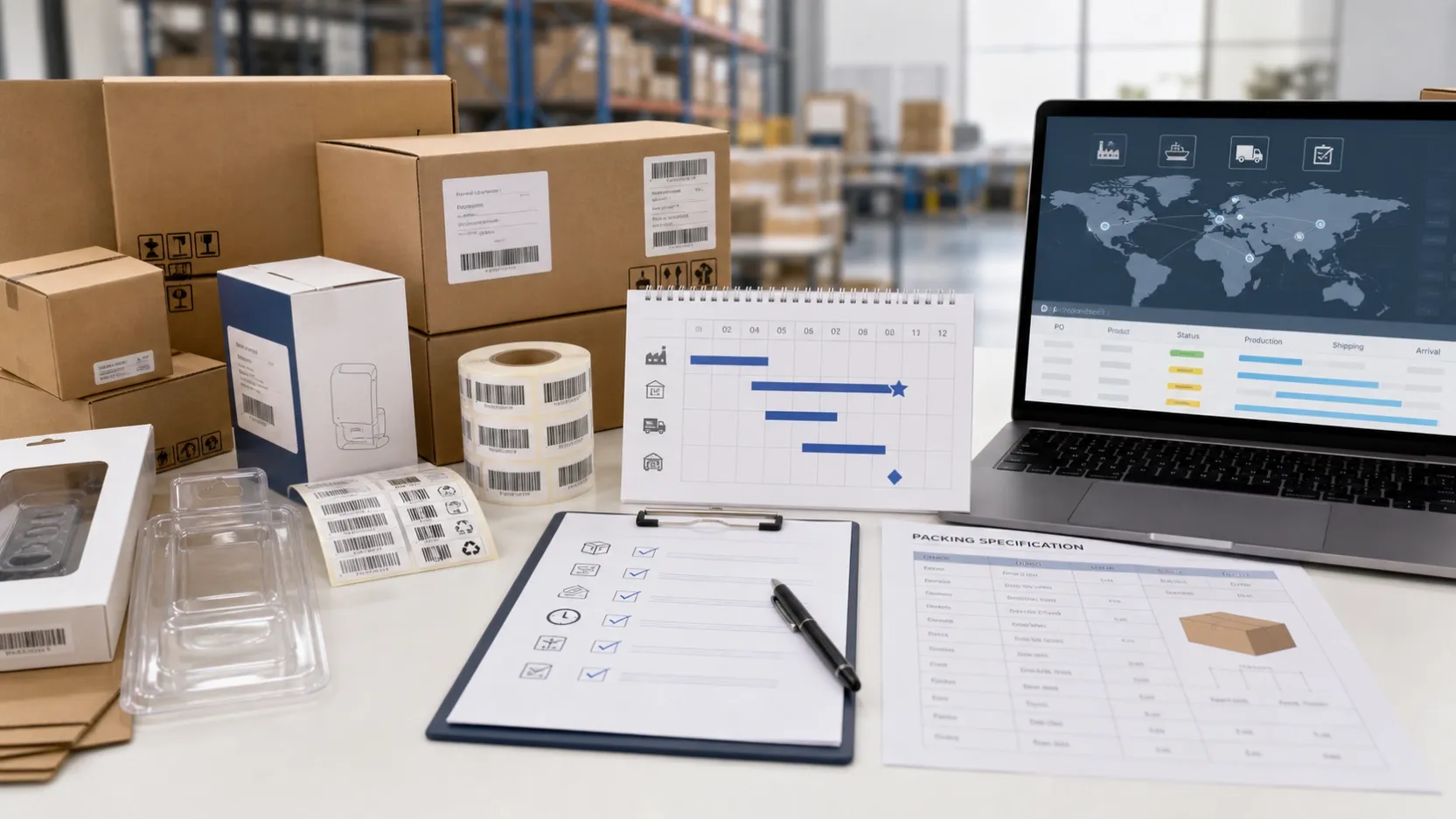
How U.S. Buyers Can Confirm Packaging, Labels and Lead Time Before OEM/ODM Production
For U.S. retailers, Amazon sellers, distributors, and private-label brands, a successful OEM/ODM order depends on more than product design and unit price. Packaging, labels, lead time, and pre-mass production confirmation can directly affect launch schedules, compliance preparation, fulfillment planning, and customer experience.
Before moving from sample approval to bulk production, buyers should confirm how the product will be packed, what labels or stickers are required, when packaging materials must be provided, and how these details affect the final production timeline.
This guide explains what U.S. buyers should check before confirming an OEM/ODM production order.
Why Packaging and Labels Matter Before Production
Packaging is not only a shipping container. For many products, it is part of the selling experience, compliance preparation, and warehouse workflow.
For U.S. buyers, packaging and labels may affect:
- Amazon FBA or marketplace preparation
- Retail shelf presentation
- Barcode and SKU management
- Carton mark requirements
- Product instructions and warning information
- Customer unboxing experience
- Return and damage risk during transportation
If packaging and label details are confirmed too late, production or shipment may be delayed even when the product itself is ready.
Confirm the Sales Channel First
Before discussing packaging, buyers should clearly explain where the product will be sold.
Common channels include:
- Amazon or other online marketplaces
- Retail stores
- Distributors
- Private-label online stores
- Promotional product programs
- Subscription boxes
- Regional wholesalers
Each channel may need different packaging and label preparation. For example, an Amazon seller may care more about barcode placement, carton labels, and compact shipping dimensions, while a retail buyer may focus more on printed packaging, shelf appeal, and display-ready cartons.
What Packaging Details Should Buyers Confirm?
Before production starts, buyers should confirm both unit packaging and shipping carton requirements.
Important details include:
- Inner box size
- Outer carton size
- Units per carton
- Product packing method
- Whether the product is assembled or flat-packed
- Whether assembly instructions are included
- Retail box design requirements
- Shipping label placement
- Carton marks
- Barcode or SKU labels
- Warning labels or instruction inserts
- Whether packaging artwork is supplied by the buyer or developed with the supplier
For products shipped flat-packed, packaging dimensions are especially important because they affect freight cost, warehouse space, and fulfillment planning.
Label and Sticker Requirements
Many private-label and Amazon seller orders require brand stickers, barcode labels, carton labels, or instruction inserts.
Buyers should confirm:
- Who provides the label design
- Required label size
- Label placement
- Barcode format
- SKU or FNSKU requirements
- Whether labels are applied to the unit box, product body, or outer carton
- Whether extra labels should be included inside the shipment
- Deadline for sending final label artwork to the supplier
If labels are provided late, shipment may be delayed even if the product is finished.
How Packaging Affects Lead Time
Lead time is not only production time. It may include several steps:
- Product sample confirmation
- Packaging design confirmation
- Label or sticker artwork confirmation
- Material preparation
- Production scheduling
- Assembly or packing
- Final inspection
- Carton marking
- Shipment arrangement
For custom packaging or private-label orders, buyers should ask when final packaging files must be confirmed. A supplier may not be able to start packing until labels, stickers, or printed packaging are ready.
This is why buyers should treat packaging and labels as part of the production schedule, not as last-minute details.
Pre-Mass Production Sample Confirmation
Before mass production, a pre-mass production sample can help confirm whether the final product matches the approved requirements.
Buyers should check:
- Product structure
- Material and color
- Printed logo or design
- Packaging format
- Label placement
- Instruction sheet
- Accessories or spare parts
- Carton information
- Overall user experience
For products with assembly steps, buyers should also check whether the instruction sheet is clear and whether the product is easy for the end customer to assemble.
Example: Corrugated Cardboard Cat Sofa Scratcher
A flat-packed corrugated cardboard cat sofa scratcher is a good example of why packaging and label confirmation matter.
For this type of product, buyers may need to confirm:
- Product model and structure
- Single unit packaging size
- Outer carton size
- Units per carton
- Assembly method
- Instruction sheet
- Brand sticker or private-label packaging
- Whether the product is suitable for Amazon or retail channels
- Lead time after final label confirmation
LeKee Care’s Custom Corrugated Cardboard Cat Sofa Collection supports flexible appearance options and flat-packed shipping for pet product buyers.
Example: Baby and Kids Products
For baby care products and kids’ ride-on products, packaging and labels may involve additional buyer-side requirements.
Buyers may need to confirm:
- Product instruction language
- Warning label placement
- Age recommendation wording
- Carton drop-test expectations
- Retail packaging design
- Spare parts list
- Assembly instruction clarity
- Market-specific compliance documents
Because these products are used by families and children, the packaging should help reduce misunderstanding and improve user confidence.
Why Cross-Category Manufacturing Experience Matters
For buyers sourcing across different product categories, a supplier’s cross-category manufacturing experience can be valuable.
A factory that works with baby care products, kids’ ride-on products, pet products, and home-care product concepts may develop transferable capabilities in:
- Material sourcing
- Sewing and soft-goods processing
- Metal tube structure
- Plastic parts
- Corrugated structure
- Packaging development
- Assembly process control
- Sample-to-production confirmation
- Quality inspection workflow
These capabilities can help buyers manage different product programs through one coordinated supplier relationship instead of treating every item as a separate sourcing project.
What to Send Before Requesting a Quote
To receive a more accurate quotation and timeline, buyers should prepare:
- Product name or reference product
- Target model or size
- Estimated order quantity
- Target market
- Sales channel
- Packaging requirements
- Label or sticker requirements
- Barcode or SKU information
- Artwork files if available
- Expected delivery schedule
- Whether a sample is required before production
The more complete the information, the easier it is for the supplier to estimate cost, packaging preparation time, and production lead time.
Final Checklist for U.S. Buyers
Before confirming production, buyers should check:
- Has the final product sample been approved?
- Are packaging dimensions confirmed?
- Are inner box and outer carton requirements clear?
- Are labels, stickers, and barcode files ready?
- Is the instruction sheet confirmed?
- Are carton marks confirmed?
- Is the lead time calculated from the correct starting point?
- Does the supplier know the target sales channel?
- Is there a final pre-mass production sample or photo confirmation?
- Is the shipment schedule realistic?
Conclusion
For U.S. buyers, packaging, labels, and lead time should be confirmed before OEM/ODM production begins. These details affect not only cost, but also marketplace readiness, retail presentation, warehouse planning, and customer experience.
A clear sourcing brief, approved sample, confirmed packaging plan, and realistic lead time can help reduce delays and avoid unnecessary changes before shipment.
LeKee Care supports OEM/ODM buyers across baby care, kids’ ride-on, pet products, and future senior care product programs. Our cross-category manufacturing experience helps buyers manage product development, packaging confirmation, sample review, and factory-direct quotation through a practical production process.