Sep 4, 2026
From Baby Products to Pet Products: How OEM/ODM Manufacturing Capabilities Transfer Across Categories
How shared OEM/ODM capabilities in sewing, metalwork, plastics, corrugated structures, packaging and sample approval can support baby, kids and pet product programs.
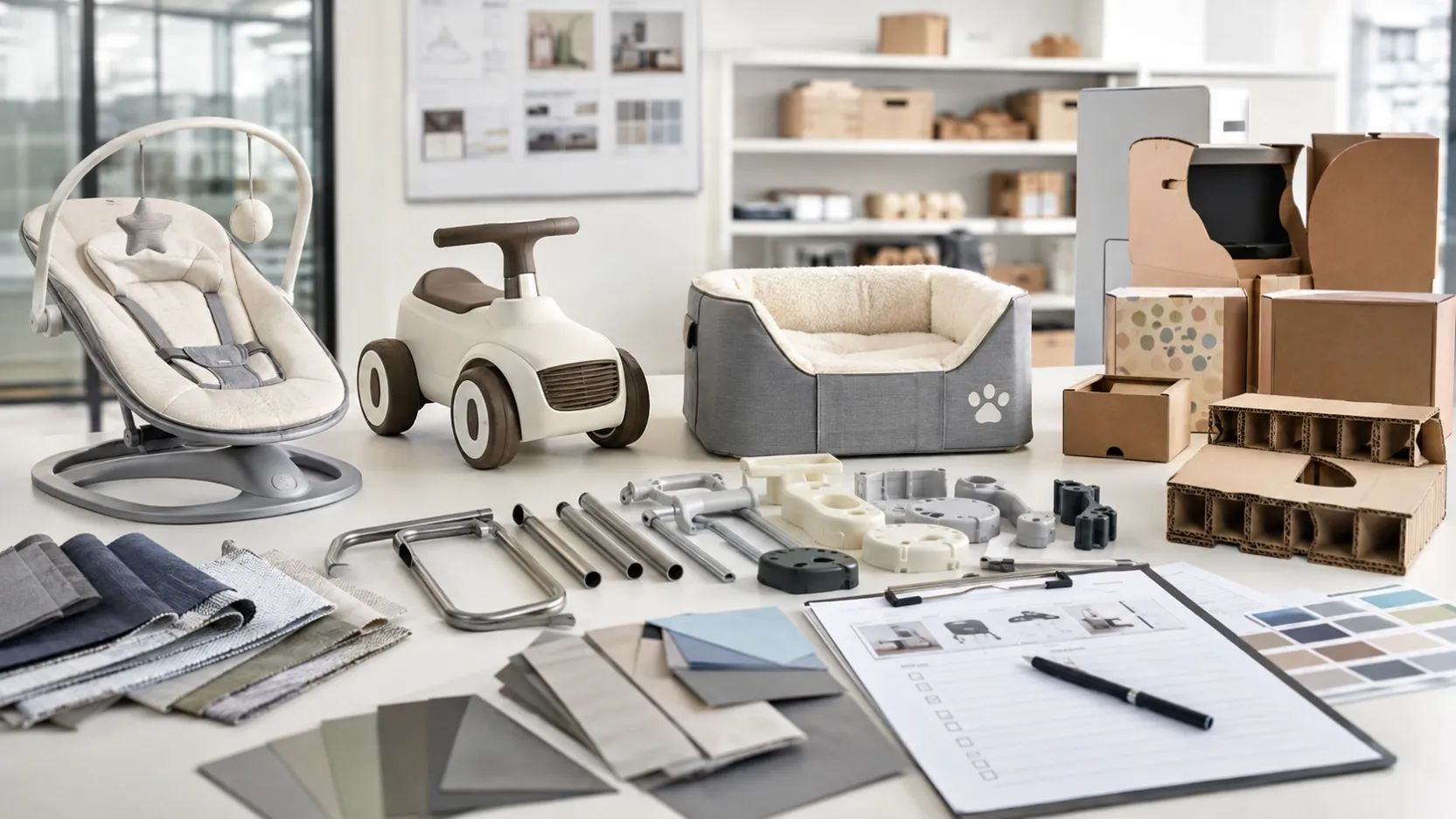
From Baby Products to Pet Products: How OEM/ODM Manufacturing Capabilities Transfer Across Categories
For many B2B buyers, baby products, kids’ ride-on products and pet products may look like separate sourcing categories. In actual OEM/ODM production, however, these categories often depend on a shared set of manufacturing capabilities: material selection, structural design, sewing, metal frame processing, plastic components, packaging control and pre-mass production sample management.
This is why a supplier’s cross-category experience can be useful when buyers are developing new product lines. A factory that understands how to control structure, comfort, safety-related details, packaging and assembly across multiple product types can often support more flexible private-label development than a supplier focused on only one narrow item.
At LeKee Care, our product range covers baby care products, kids’ ride-on products and pet products. The value is not simply that we offer different items. The more important advantage is that several core manufacturing and project-management capabilities can transfer from one category to another.
Why Cross-Category Manufacturing Capability Matters
For importers, distributors, Amazon sellers and private-label brands, product development is rarely limited to one SKU forever. A buyer may begin with a baby cradle, then add a kids’ balance bike, or test a pet carrier or cat scratcher in another channel. When the supplier already understands related materials, structures, packaging formats and production approval steps, the buyer can communicate requirements more efficiently.
Cross-category capability also helps buyers evaluate suppliers at a deeper level. Instead of asking only whether a factory can make one product, buyers can ask whether the factory has transferable systems for sample review, material sourcing, packaging confirmation, production consistency and shipment preparation.
1. Sewing and Soft-Goods Capability
Sewing is not limited to one product category. Baby carriers, baby bedding accessories, pet carriers, soft pet beds and fabric components for kids’ products all require attention to fabric selection, stitching strength, edge finishing, padding, lining, zippers, handles and user comfort.
A supplier with soft-goods experience can help buyers compare fabric weight, hand feel, lining structure, sewing tolerance and branding methods across different product programs. For example, experience from a baby carrier project may support stronger quality awareness when developing a padded pet carrier or fabric-based pet travel bag.
The product use case may change, but the manufacturing discipline remains connected: material confirmation, seam strength, sample comments, color matching and final bulk consistency.
2. Metal Frame and Structural Support Capability
Many baby, kids and pet products rely on frame structure or load-bearing components. Baby electric cradles, bed rails, kids’ ride-on toys and elevated pet bathing stations may all involve metal tubes, connectors, brackets, folding points or support frames.
This shared capability helps buyers discuss stability, assembly logic, frame finish, structural tolerance and packing method with one supplier. A factory familiar with frame-based baby products can often apply similar attention to kids’ ride-on structures or pet-use products that need stable support.
For B2B buyers, the key is not to assume every frame product is the same. The key is to confirm whether the supplier has a repeatable process for reviewing structure, load direction, assembly parts, finish quality and pre-shipment consistency.
3. Plastic Components and Molded Parts
Plastic parts appear across many product categories: wheels, handles, caps, connectors, panels, protective covers, accessories and functional details. Kids’ tricycles and balance bikes may use wheels, grips and molded parts; pet products may use buckles, ventilation panels or accessories; baby products may include plastic connectors or adjustment pieces.
When a supplier understands plastic part sourcing and matching, buyers can discuss color, surface finish, assembly fit, durability expectations and packaging protection more clearly. This is especially useful for private-label programs where visual consistency and small component details influence the final retail impression.
4. Corrugated Cardboard Structure and Packaging Experience
Corrugated cardboard capability is relevant in two ways. First, it can be used as a product material, such as in corrugated cardboard cat scratchers and cat sofa scratchers. Second, it supports packaging design across baby, kids and pet products.
For pet products such as the Custom Corrugated Cardboard Cat Sofa Collection, corrugated structure, edge finishing, assembly fit and scratching surface matter directly to the product experience. For other categories, corrugated knowledge helps with carton strength, insert design, flat-pack protection and shipping cost control.
This makes corrugated experience useful beyond one pet SKU. It supports both product development and export packaging planning.
5. Packaging, Labels and SKU Planning
Packaging is one of the strongest connection points across categories. Whether buyers source baby products, kids’ products or pet products, they usually need to confirm retail box design, inner protection, carton size, barcode labels, SKU labels, carton marks, instruction sheets and market-specific text before production is completed.
This is especially important for U.S. buyers preparing products for Amazon, retail distribution or private-label channels. Packaging and label delays can slow down production even when the product sample itself is already approved.
A cross-category supplier can help buyers build a repeatable packaging checklist that works across different product lines. This reduces repeated communication and helps new SKUs move from sample stage to production more smoothly.
Related guide: How U.S. Buyers Can Confirm Packaging, Labels and Lead Time Before OEM/ODM Production
6. Pre-Mass Production Sample Control
Before bulk production starts, buyers should confirm the sample standard clearly. This applies across baby products, kids’ ride-on products and pet products. The confirmed sample should reflect the agreed structure, materials, color, logo, packaging method, labels and key workmanship details.
A supplier with cross-category sample control can help buyers review the right points for each product type while keeping the overall approval process consistent. For baby products, structure and user-facing details may be the priority. For kids’ ride-on products, frame, wheels and assembly may be more important. For pet products, durability, material feel, ventilation, scratching surface or packaging presentation may matter most.
The details change by category, but the process is similar: confirm the product, confirm the packaging, confirm the production standard and keep an approval record before mass production.
How Buyers Can Use This Capability Transfer Model
When evaluating an OEM/ODM supplier, buyers can use cross-category capability as a practical discussion framework. Instead of asking only for a price, ask how the supplier manages materials, structure, soft goods, metal frames, plastic parts, packaging and sample approval across different product programs.
A simple buyer checklist may include:
- Which materials and processes are shared across your baby, kids and pet product lines?
- Can the supplier explain how sample approval is handled before mass production?
- Can the supplier support packaging, label and carton mark planning for different SKUs?
- Does the supplier understand both product structure and export packaging requirements?
- Can previous category experience help reduce development risk for the next product line?
- Are product photos, specifications and sample comments recorded clearly before bulk production?
Related Product Lines
Frequently Asked Questions
Q: Why is cross-category manufacturing experience useful for OEM/ODM buyers?
A: It helps buyers work with a supplier that understands shared production systems such as material sourcing, structure, sewing, frames, plastic parts, packaging, labels and sample approval across different product lines.
Q: Can baby product manufacturing experience support pet product development?
A: In some areas, yes. Soft goods, stitching control, padding, packaging confirmation and sample approval experience can transfer from baby products to certain pet products such as pet carriers and soft pet beds.
Q: How do kids’ ride-on products connect with baby and pet product manufacturing?
A: Kids’ ride-on products often involve frame structure, plastic components, wheels, color matching and packaging protection. These capabilities can overlap with other frame-based or component-based product categories.
Q: Why does packaging knowledge matter across different categories?
A: Packaging affects retail presentation, warehouse handling, carton size, labels, barcodes and shipment preparation. A clear packaging process can reduce delays across baby, kids and pet product orders.
Q: What should buyers send when requesting a cross-category OEM/ODM quote?
A: Buyers should send product photos or drawings, target materials, size requirements, logo needs, packaging requirements, label files, estimated quantity, destination market and sample expectations.
Discuss Your Next OEM/ODM Product Program
If you are planning a new baby, kids or pet product program, send us your product brief, reference photos, target quantity, packaging requirements and expected timeline. LeKee Care can help review the project and suggest how existing manufacturing capabilities may support your next OEM/ODM order.